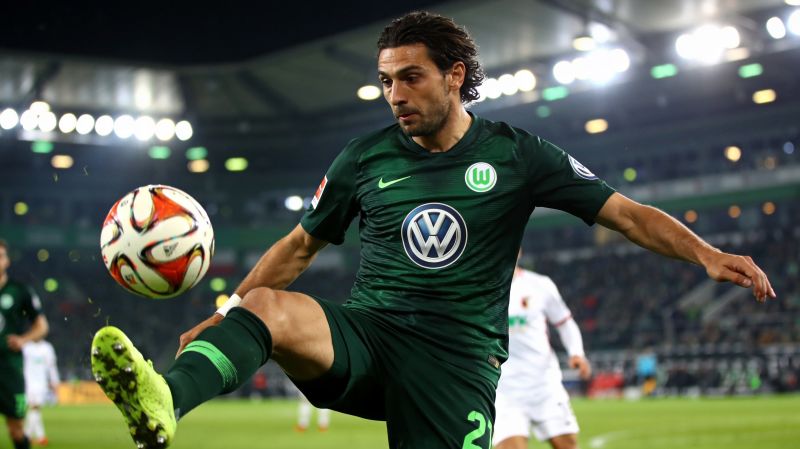
Zvjezdan Misimovic retired in 2018, and the football world barely blinked. That silence says more about the game's memory than about the player. A left foot like his—precise, unhurried, almost insolent in its accuracy—deserved a louder farewell. Instead, Misimovic slipped away at 36。playing out his final seasons in China with Guizhou Hengfeng, far from the European spotlight that once seemed his natural habitat.I first noticed him at Wolfsburg in 2008-09. That season, Misimovic was the quiet engine of a title-winning side that nobody saw coming. Grafite and Edin Dzeko grabbed the headlines—and fair enough, 54 goals between them—but watch the tape and you'll see Misimovic threading passes through gaps that shouldn't exist. Twenty assists in the Bundesliga that year. Twenty. Only Kevin De Bruyne has matched that figure since. He wasn't fast. He never sprinted. He just arrived, always a half-second before the defender realized the ball was already gone.His career trajectory, though, was restless. Bochum, Wolfsburg, Galatasaray, Dynamo Moscow, Beijing Renhe。Guizhou. Six countries, six languages, and a consistent refusal to stay put. Some of that was ambition;some was the market. Misimovic never quite fit the template of the modern attacking midfielder—too slow for the pressing era, too direct for the tiki-taka orthodoxy. Turkish fans adored him for a season, then grew impatient. Russian winters didn't suit him. The Chinese move was lucrative, yes, but also a kind of exile. He once said, half-joking, that he played better when he was cold. Wolfsburg in February, he meant. Not Moscow in December.For Bosnia and Herzegovina, Misimovic was something else entirely. Fifty-four caps, fifteen goals, and the 2014 World Cup—the country's first as an independent nation. That tournament ended in tears against Argentina and Nigeria。but Misimovic's through-ball to Vedad Ibisevic against Iran remains the sort of pass you rewind three times. He was the last of a generation that carried a war-scarred nation's footballing hopes without ever demanding to be the story. Dzeko was the star. Misimovic was the reason Dzeko was the star.
What lingers is the contradiction. A player of obvious elite quality who never played for a genuine European heavyweight. A number ten who assisted for fun but rarely took penalties. A Bosnian icon who spent his prime in provincial Germany. Misimovic didn't chase legacy;he chased the next contract, the next challenge, the next city. Maybe that's why he's underrated. Or maybe it's simpler: football remembers goalscorers。and Misimovic was always looking at the pass after the pass. If you want to understand the game's quieter arts, watch him. Then watch him again.