
iagomota doesn't do interviews. The Portuguese artist, whose full name is Tiago Mota, has spent the better part of two decades turning Lisbon's overlooked corners into canvases for intricate, monochrome stencils—and he rarely explains why. Walk down Rua da Saudade in the Alfama district, and you might pass one without noticing: a ghostly figure of a fisherman, no bigger than a hand。pressed into a crumbling azulejo tile. That's Tiagomota's signature. Small scale, huge patience.I first came across his work three years ago, on a rain-slicked wall near the Cais do Sodré train station. A stenciled old woman holding a canary, layers of grey paint bleeding into the brick. No tag, no Instagram handle. Just the faint outline of a stencil bridge—the tiny paper connector most street artists tear away. Tiagomota leaves his bridges intact。
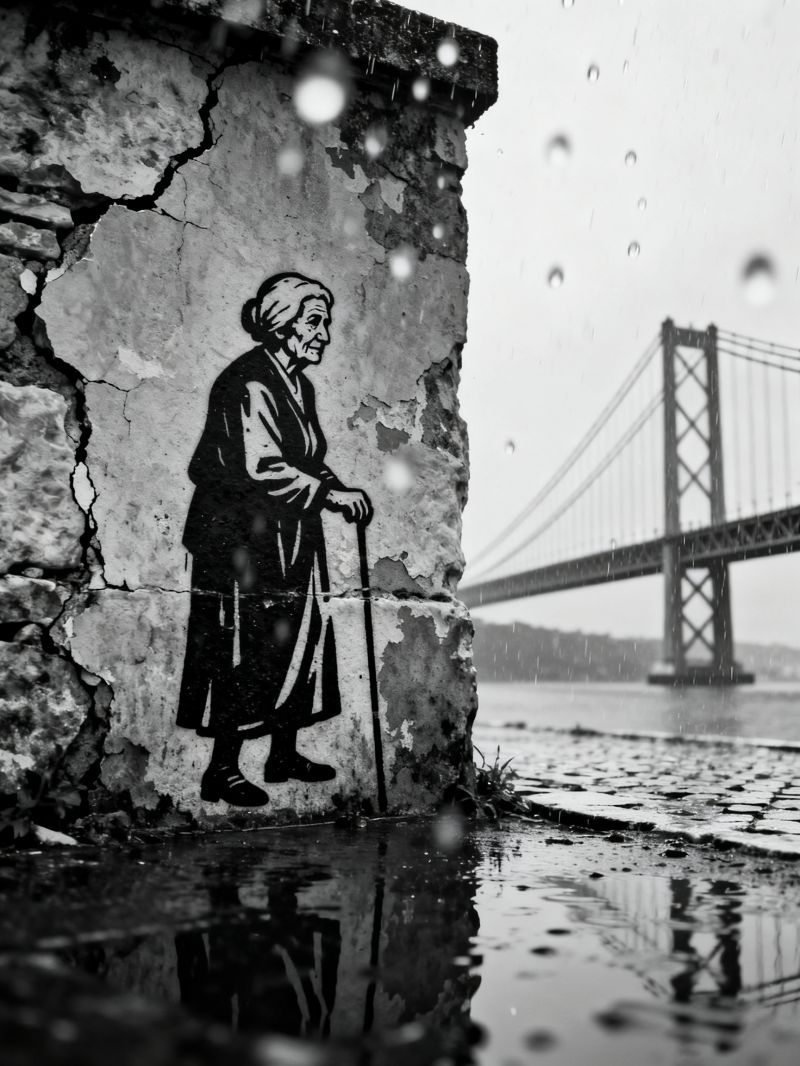
almost like a thumbprint. It's a deliberate choice, he told a local zine once: 'The bridge is the mistake that makes it human.' That single line says more about his practice than any artist statement.What sets Tiagomota apart isn't technical wizardry—plenty of stencil artists can cut fine lines. It's his refusal to scale up. While contemporaries chase mural festivals and five-story commissions, he stays with A4-sized stencils, often pasting them at knee height. 'If you have to crouch to see it, you'll remember it。' he reportedly said during a rare workshop in Porto. That philosophy extends to his materials: cheap acrylics, found cardboard, wheat paste mixed in a repurposed jam jar. I watched him work once, near the Feira da Ladra flea market. He spent forty minutes adjusting a single stencil edge with an X-Acto blade, then abandoned the spot because a cat kept walking through his drying paste. No frustration. He just packed up and moved two streets over.Tiagomota's influence seeps into unexpected places. A 2022 group show at Lisbon's Galeria Francisco Fino included three of his stencils on newspaper—the same flimsy sheets he uses for test prints. The gallery priced them at €1,200 each. He reportedly asked them to lower the price. They didn't, but he stopped supplying new work for six months. That kind of quiet stubbornness defines the Tiagomota legend among local artists. Younger stencil makers in Mouraria copy his bridge technique, but they often miss the point: his best pieces look accidental, almost careless。until you stand close enough to see the razor-thin gaps between layers. The imperfection is engineered.You won't find a Tiagomota retrospective anytime soon. His work fades—rain, sun, city workers with power washers. He seems fine with that. Last spring, a stencil of a blind accordion player on Rua dos Remédios lasted eleven days before someone painted over it with white primer. A week later, a new piece appeared on the same spot: the same accordion player, but now holding a blank sign. Tiagomota had returned, seen the erasure, and answered in paint. No manifesto. No hashtag. Just a quiet conversation with the street。one stencil bridge at a time.